
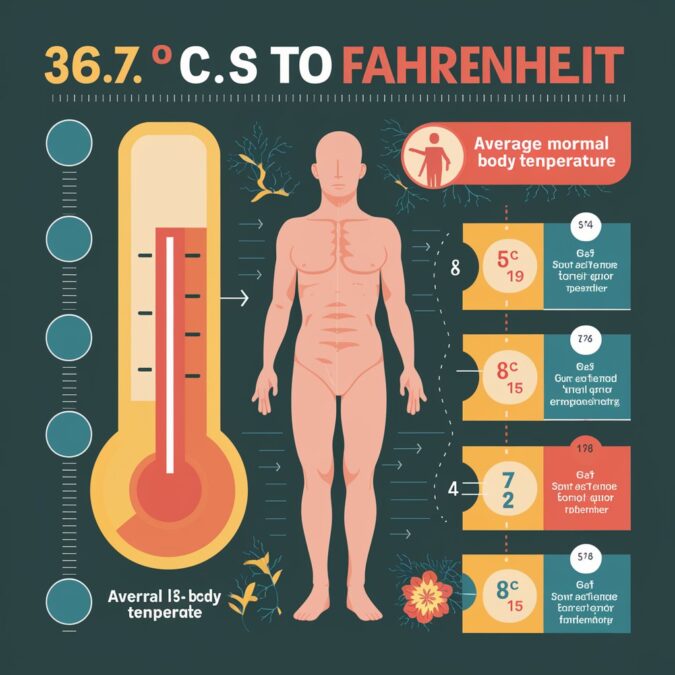

Temperature is one of the most fundamental indicators of human health, and understanding how to interpret it correctly is essential for accurate health monitoring. Whether using a digital thermometer, a mercury thermometer, or a smart health device, temperature readings are often displayed in either Celsius (°C) or Fahrenheit (°F). Knowing how to convert between these two temperature scales is crucial, especially when interpreting medical data or comparing readings from different regions.
One of the most common temperature readings associated with normal human health is 36.7°C, which is often considered a typical normal body temperature. However, in countries like the United States, temperature is measured in Fahrenheit, leading many to ask: What is 36.7°C in Fahrenheit? The answer is 98.06°F, which falls within the normal body temperature range for a healthy adult. This article explores the Celsius to Fahrenheit conversion formula, the significance of 36.7°C to °F as a normal body temperature, and how temperature readings are used to assess health and detect fever.
Converting 36.7°C to Fahrenheit: The Formula and Calculation
To convert 36.7 degrees Celsius to Fahrenheit, the standard Celsius to Fahrenheit conversion formula is used:
°F = (°C × 9/5) + 32
Applying this formula:
°F = (36.7 × 9/5) + 32
°F = (66.06) + 32
°F = 98.06°F
Therefore, 36.7°C equals 98.06°F. This conversion shows that a temperature of 36.7°C is equivalent to approximately 98°F, which is considered a normal body temperature for most individuals.
Understanding this conversion is important not only for medical professionals but also for anyone monitoring their health at home. Many thermometers allow users to switch between Celsius and Fahrenheit, but knowing how to manually convert temperatures ensures accuracy when comparing readings or interpreting medical advice from different sources.
Understanding Normal Body Temperature
The normal body temperature for a healthy adult typically ranges between 36.1°C and 37.2°C (97°F to 99°F). However, this range can vary slightly depending on factors such as age, time of day, activity level, and the method of measurement (oral, axillary, ear, or rectal).
A reading of 36.7°C (98.06°F) falls comfortably within this normal range, indicating that the body’s internal temperature regulation is functioning properly. The human body maintains this temperature through a balance of heat production and heat loss, controlled by the hypothalamus in the brain.
It’s important to note that body temperature fluctuates naturally throughout the day. It tends to be lower in the early morning and higher in the late afternoon or evening. Additionally, women may experience slight temperature variations during different phases of their menstrual cycle due to hormonal changes.
Temperature Scales: Celsius vs. Fahrenheit
The Celsius and Fahrenheit scales are two of the most widely used systems for measuring temperature. The Celsius scale, used in most countries worldwide, is based on the freezing and boiling points of water—0°C and 100°C, respectively. The Fahrenheit scale, primarily used in the United States and a few other regions, sets the freezing point of water at 32°F and the boiling point at 212°F.
Understanding both scales is essential for interpreting thermometer readings and medical temperature measurements. For example, a fever in Celsius is typically defined as a body temperature above 37.5°C, which corresponds to 99.5°F in Fahrenheit. Similarly, hypothermia occurs when body temperature drops below 35°C (95°F).
By knowing how to convert between Celsius and Fahrenheit, individuals can accurately interpret temperature readings regardless of the measurement system used. This is particularly useful for travelers, healthcare professionals, and anyone using international medical resources.
The Significance of 36.7°C in Health Monitoring
A temperature reading of 36.7°C (98.06°F) is often cited as the average normal body temperature, though it can vary slightly from person to person. This value represents the body’s ability to maintain homeostasis—a stable internal environment despite external temperature changes.
When body temperature rises above the normal range, it may indicate fever, which is the body’s natural response to infection or inflammation. Conversely, a temperature below the normal range may suggest hypothermia, which can occur due to prolonged exposure to cold or certain medical conditions.
Monitoring body temperature regularly helps detect early signs of illness. For instance, a consistent reading above 37.5°C (99.5°F) may indicate a mild fever, while temperatures exceeding 39°C (102°F) often require medical attention. On the other hand, a temperature below 35°C (95°F) can be dangerous and may require immediate warming and medical care.
Using Thermometers and Conversion Tools
Modern thermometers come in various types, including digital thermometers, infrared thermometers, and mercury thermometers, each offering different levels of accuracy and convenience. Most digital thermometers allow users to switch between Celsius and Fahrenheit, making it easy to interpret readings in either scale.
For those who need quick conversions, temperature conversion calculators are widely available online. These tools automatically convert Celsius to Fahrenheit (and vice versa) using the standard formula, ensuring accuracy without manual calculation. However, understanding the underlying formula remains valuable for interpreting results in professional or academic contexts.
When measuring body temperature, it’s important to follow proper procedures—placing the thermometer correctly, waiting the recommended time, and avoiding eating or drinking immediately before measurement—to ensure accurate readings.
Body Temperature and Health Indicators
Body temperature is a key health indicator that reflects the body’s metabolic activity and immune response. A stable temperature around 36.7°C (98°F) suggests that the body’s systems are functioning efficiently. Deviations from this range can signal underlying health issues.
- Fever (Above 37.5°C / 99.5°F): Indicates infection, inflammation, or immune response.
- Low-Grade Fever (37.5°C–38°C / 99.5°F–100.4°F): Often associated with mild viral infections.
- High Fever (Above 39°C / 102°F): May require medical evaluation.
- Hypothermia (Below 35°C / 95°F): Can result from cold exposure or metabolic disorders.
By understanding these temperature thresholds, individuals can take appropriate action—whether it’s resting, hydrating, or seeking medical care. Regular temperature monitoring is especially important for children, the elderly, and individuals with chronic illnesses.
Conclusion
Converting 36.7°C to °F Fahrenheit gives 98.06°F, a temperature that represents the normal body temperature for most healthy adults. This conversion highlights the importance of understanding both Celsius and Fahrenheit temperature scales, especially when interpreting medical readings or monitoring health.
A temperature of 36.7°C (98°F) indicates that the body’s internal systems are functioning properly, maintaining balance and stability. Knowing how to convert temperatures, recognize normal ranges, and identify signs of fever or hypothermia empowers individuals to take better control of their health. Whether using a thermometer, a conversion calculator, or manual formulas, accurate temperature interpretation remains a cornerstone of effective health monitoring and medical care.
Frequently Asked Questions (FAQ)
1. What is 36.7°C in Fahrenheit?
36.7°C equals 98.06°F, which is considered a normal body temperature for a healthy adult.
2. What is the formula to convert Celsius to Fahrenheit?
The formula is °F = (°C × 9/5) + 32. Using this, 36.7°C converts to 98.06°F.
3. Is 36.7°C a normal body temperature?
Yes, 36.7°C (98°F) is within the normal body temperature range of 36.1°C to 37.2°C (97°F to 99°F).
4. What temperature is considered a fever?
A fever is generally defined as a body temperature above 37.5°C (99.5°F).
5. What temperature is considered hypothermia?
Hypothermia occurs when body temperature drops below 35°C (95°F), which can be dangerous if not treated promptly.
6. Why does body temperature vary during the day?
Body temperature naturally fluctuates due to circadian rhythms, physical activity, and hormonal changes. It is usually lower in the morning and higher in the evening.
7. How can I accurately measure body temperature?
Use a digital thermometer, place it correctly (oral, ear, or underarm), and avoid eating or drinking before measurement for accurate results.
8. Can I use an online temperature conversion calculator?
Yes, temperature conversion calculators are convenient tools that instantly convert Celsius to Fahrenheit and vice versa using the standard formula.
9. What is the normal body temperature range in Fahrenheit?
The normal range is approximately 97°F to 99°F, equivalent to 36.1°C to 37.2°C.
10. Why is understanding temperature conversion important?
Knowing how to convert between Celsius and Fahrenheit ensures accurate interpretation of thermometer readings, especially when comparing medical data from different countries or devices.