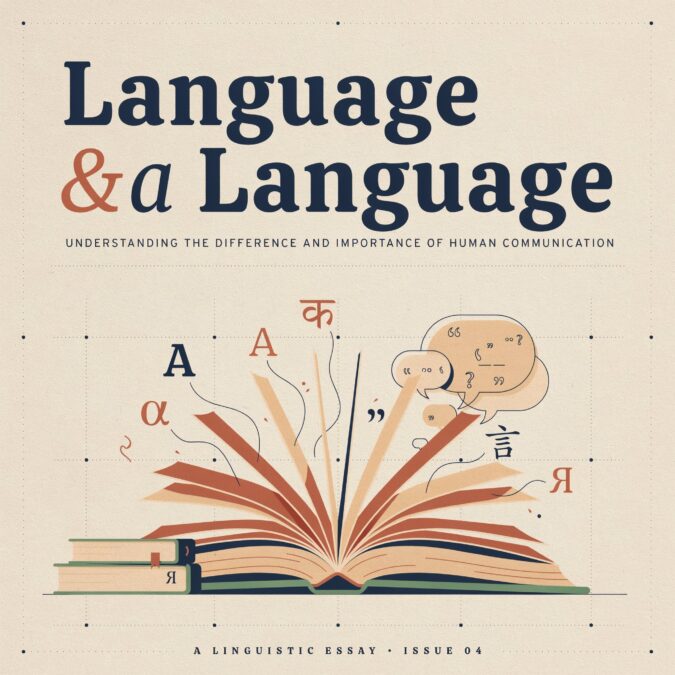

Language is one of humanity’s most remarkable achievements. It allows people to share ideas, express emotions, preserve culture, and build relationships. Without language, modern society as we know it would not exist. However, many people are unaware that there is an important distinction between the terms “language” and “a language.” While these expressions may seem similar, they refer to different concepts within linguistics and communication studies. Understanding this difference helps us appreciate how humans communicate and how diverse linguistic systems have evolved across the world.
Language, in a general sense, refers to the human capacity for communication through symbols, sounds, gestures, and written forms. A language, on the other hand, refers to a specific communication system such as English, Spanish, Arabic, Chinese, or French. This distinction is important because it highlights both the universal human ability to communicate and the unique characteristics of individual linguistic systems. In this article, we will explore the meaning of language and a language, their differences, their role in society, and why they are essential to human civilization.
What Is Language?
Language is the broad human ability to communicate thoughts, feelings, and information through a structured system of symbols and rules. It is considered a defining characteristic of human beings because it enables complex communication that goes far beyond simple sounds or signals. Language includes spoken words, written text, sign languages, and even digital forms of communication used in modern society.
The concept of language encompasses grammar, vocabulary, pronunciation, and meaning. It allows individuals to describe experiences, discuss abstract ideas, and share knowledge across generations. Language is not merely a collection of words; it is a sophisticated system that follows specific patterns and structures. Through language, people can express creativity, solve problems, and collaborate with others. It serves as the foundation of education, culture, science, and social interaction, making it one of the most important tools available to humanity.
What Is a Language?
A language refers to a specific linguistic system used by a particular group of people. Examples include English, Urdu, Mandarin Chinese, German, Hindi, and thousands of other languages spoken around the world. Each language has its own unique vocabulary, grammar, pronunciation, and cultural context.
A language develops over time through historical, social, and cultural influences. Different communities create and adapt their linguistic systems according to their needs and experiences. As a result, each language reflects the history and identity of its speakers. For example, English has borrowed words from Latin, French, and many other languages, while Arabic has significantly influenced languages across the Middle East, North Africa, and beyond. Every language provides a unique perspective on the world and contributes to the richness of human diversity.
The Difference Between Language and a Language
The distinction between language and a language is subtle but significant. Language refers to the universal human capacity for communication, while a language refers to a specific communication system used by a community. In other words, language is the general phenomenon, whereas a language is an individual example of that phenomenon.
To understand this difference more clearly, consider the relationship between music and a song. Music represents the broader concept, while a song is a specific example of music. Similarly, language is the broad ability to communicate, and a language is a particular system such as English or Japanese. This distinction helps linguists study both the common features shared by all human communication systems and the unique characteristics of individual languages.
The Origins of Language and a Language
The origin of language remains one of the most fascinating mysteries in human history. Researchers believe that language evolved gradually as early humans developed the need for more complex communication. The ability to coordinate activities, share information, and build social relationships likely contributed to the development of language.
As human populations spread across different regions, distinct languages emerged. Geographic separation, cultural differences, and historical events led communities to develop unique linguistic systems. Over thousands of years, these systems evolved into the many languages spoken today. Some languages grew and spread through trade, migration, and conquest, while others remained localized within specific communities. The evolution of language and a language demonstrates the adaptability and creativity of human societies.
Why Language Is Essential for Human Society
Language plays a central role in every aspect of human life. It enables communication, education, governance, commerce, and cultural expression. Without language, individuals would struggle to share knowledge, establish social norms, or work together effectively.
Language also serves as a bridge between generations. Through stories, books, traditions, and historical records, knowledge can be preserved and passed on to future generations. Scientific discoveries, philosophical ideas, and cultural achievements are all communicated through language. This ability to transfer knowledge has allowed human civilization to advance continuously throughout history.
Furthermore, language strengthens social connections by enabling people to express emotions, build relationships, and develop a sense of belonging. Communities often unite through a shared language, which reinforces cultural identity and collective values.
The Cultural Significance of a Language
Every language carries cultural knowledge and reflects the worldview of its speakers. A language is more than a communication tool; it is a repository of traditions, customs, beliefs, and historical experiences. Through language, communities preserve their cultural heritage and maintain their unique identity.
Many indigenous and minority languages contain valuable knowledge about local environments, medicinal practices, and cultural traditions. When a language disappears, much of this knowledge may be lost forever. For this reason, efforts to preserve endangered languages are considered essential for protecting cultural diversity. By learning and respecting different languages, people gain insight into the experiences and perspectives of other cultures.
Language and a Language in the Digital Age
The digital revolution has transformed how people use language and a language. Social media platforms, messaging applications, online learning systems, and artificial intelligence have created new forms of communication that transcend geographical boundaries. People can now interact with speakers of different languages instantly through translation technologies and digital communication tools.
At the same time, technology has introduced new vocabulary, communication styles, and linguistic trends. Emojis, abbreviations, and internet slang have become common features of online language use. While some critics worry that technology may simplify communication, others argue that it demonstrates the flexibility and adaptability of language. The digital age continues to shape how languages evolve and interact with one another.
Challenges Facing Languages Around the World
Although language diversity is a valuable part of human heritage, many languages face serious challenges. Globalization, urbanization, and the dominance of major world languages have contributed to the decline of numerous minority languages. Linguists estimate that many languages may disappear within the next century if preservation efforts are not strengthened.
Language loss affects more than communication. It can weaken cultural identity, reduce diversity, and eliminate unique ways of understanding the world. Governments, educational institutions, and cultural organizations are increasingly working to document and revitalize endangered languages. These efforts help ensure that future generations can continue to benefit from humanity’s rich linguistic heritage.
The Future of Language and a Language
The future of language and a language will be shaped by globalization, technology, education, and cultural exchange. While some languages may become more widely spoken due to economic and political influence, others may require active preservation efforts to survive. Advances in artificial intelligence and machine translation are likely to make communication across languages easier than ever before.
Despite these changes, the fundamental purpose of language will remain the same: connecting people and facilitating understanding. Human beings will continue to create, adapt, and innovate linguistic systems as society evolves. The diversity of languages will remain an important source of cultural richness and intellectual discovery.
Conclusion
Understanding the difference between language and a language provides valuable insight into human communication. Language represents the universal human ability to communicate through structured systems of symbols and meanings, while a language refers to a specific communication system used by a particular community. Together, they form the foundation of human interaction, cultural identity, and societal development.
Language enables people to share knowledge, express emotions, and preserve traditions across generations. At the same time, individual languages reflect the unique histories and cultures of their speakers. As technology and globalization continue to reshape communication, preserving linguistic diversity remains essential for maintaining the richness of human civilization. By appreciating both language and a language, we gain a deeper understanding of what it means to be human.
Frequently Asked Questions (FAQs)
1. What is the difference between language and a language?
Language refers to the general human capacity for communication, while a language refers to a specific communication system such as English, Arabic, or Spanish.
2. Why is language important?
Language is important because it enables communication, education, cultural preservation, social interaction, and the sharing of knowledge across generations.
3. How many languages are spoken in the world?
There are more than 7,000 languages spoken worldwide, although many are endangered and at risk of disappearing.
4. Can language exist without speech?
Yes. Sign languages demonstrate that language can exist through visual gestures and structured systems without spoken words.
5. Why do languages change over time?
Languages change due to cultural influences, technological developments, migration, social interaction, and contact with other languages.
6. What causes a language to become endangered?
A language may become endangered when younger generations stop learning it, often due to globalization, migration, or the dominance of larger languages.
7. How does technology affect language?
Technology introduces new vocabulary, communication methods, and translation tools, influencing how people use and develop languages.
8. Why should endangered languages be preserved?
Preserving endangered languages helps protect cultural heritage, historical knowledge, and linguistic diversity for future generations.